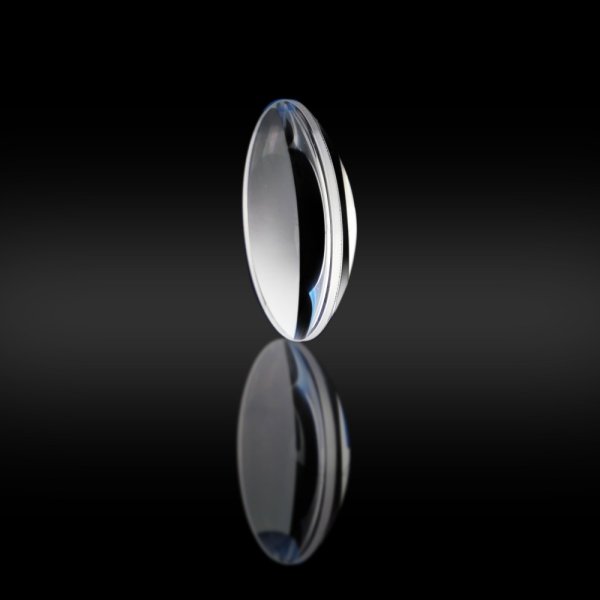
Lithium fluoride lens
Lithium fluoride lenses are one of Sichuan Yuchuang Infrared Optics Co., Ltd.'s main products. The company is dedicated to the production and development of optical components for various consumer electronics applications. Through its advanced manufacturing processes and rigorous quality control, YC Infrared Optics has become a trusted partner. For more information, please contact 19141919467.
 Click to enlarge
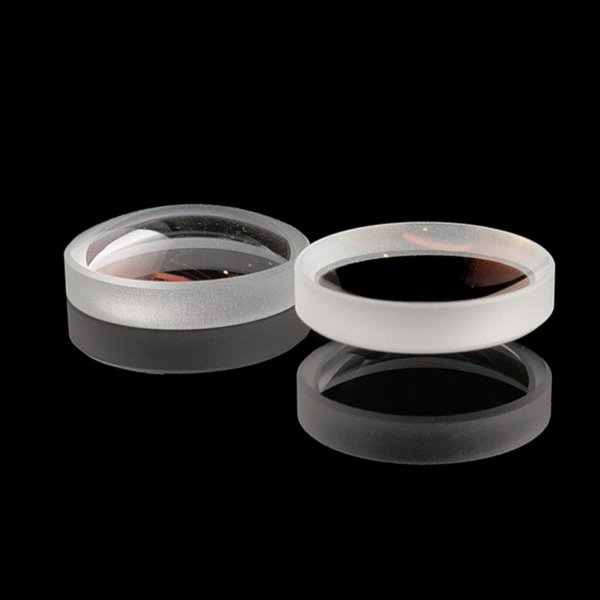
Lithium fluoride lens
Lithium fluoride lenses are one of Sichuan Yuchuang Infrared Optics Co., Ltd.'s main products. The company is dedicated to the production and development of optical components for various consumer electronics applications. Through its advanced manufacturing processes and rigorous quality control, YC Infrared Optics has become a trusted partner. For more information, please contact 19141919467.
- Drawing-based OEM / ODM
- Prototype to volume
- ZYGO metrology available
Product description
Lithium fluoride (LiF) lenses are important optical materials with unique physical and chemical properties, widely used in various optical fields. Their excellent optical performance and wide wavelength coverage make them important in ultraviolet, visible, and infrared optics. However, due to their sensitivity to thermal shock and hygroscopic properties, appropriate protective measures must be taken during use to prevent deliquescence and deformation.
Material properties
1. Crystal structure : Lithium fluoride crystals are usually cubic and have good optical isotropy, which means that their optical properties are uniform in all directions.
2. Refractive index : Lithium fluoride has a low refractive index of about 1.39, which is low in the visible light range. This enables it to change the direction of light at a smaller angle when making lenses, thereby reducing energy loss and image distortion.
3. Transmission range : LiF crystals have extremely high transmittance in the range of vacuum ultraviolet (VUV) to infrared (IR), especially in the vacuum ultraviolet region (110nm to 700nm), where their transmission performance is particularly outstanding.
4. Physical properties : Lithium fluoride has a crystal density of 2.64 g/cm³ and a melting point of 870°C. It has medium hardness and hygroscopicity, is sensitive to thermal shock, and easily softens at high temperatures.
Optical wavelength range
The optical wavelength range of lithium fluoride lenses is very large, from the vacuum ultraviolet (VUV) to the infrared (IR) region. Specifically:
• Vacuum ultraviolet band : From 110nm to 700nm, lithium fluoride crystals show extremely high transmittance and are one of the better VUV emitters currently available.
• Visible light band : In the visible light range, lithium fluoride crystals also have good transmission properties and are suitable for manufacturing optical lenses, prisms and other components.
• Infrared band : In the infrared band, lithium fluoride crystal has a low refractive index and can be used directly without reflective coating. It is often used as a window material for infrared lasers and infrared night vision devices.
Application Scenario
1. Ultraviolet optical system : Due to its high transmittance in the vacuum ultraviolet band, lithium fluoride lenses are widely used in ultraviolet optical systems, such as ultraviolet laser transmission and deep ultraviolet spectroscopy.
2. Infrared optical systems : Lithium fluoride lenses are also widely used in infrared optical systems, such as thermal imaging systems, aerospace optical systems and excimer laser optical systems.
3. X-ray detectors : Lithium fluoride crystals are highly sensitive to X-rays and are therefore widely used in X-ray detectors to detect and convert X-rays into visible light signals.
4. OLED display : Due to its excellent optical properties, lithium fluoride crystals are used as coating materials for OLED displays to improve the performance and stability of the display.
You may also need
Complementary optics from the same manufacturing lines.
Need a custom version of this optic?
Send wavelength, diameter, substrate, and coating requirements — we quote prototypes and production volumes.